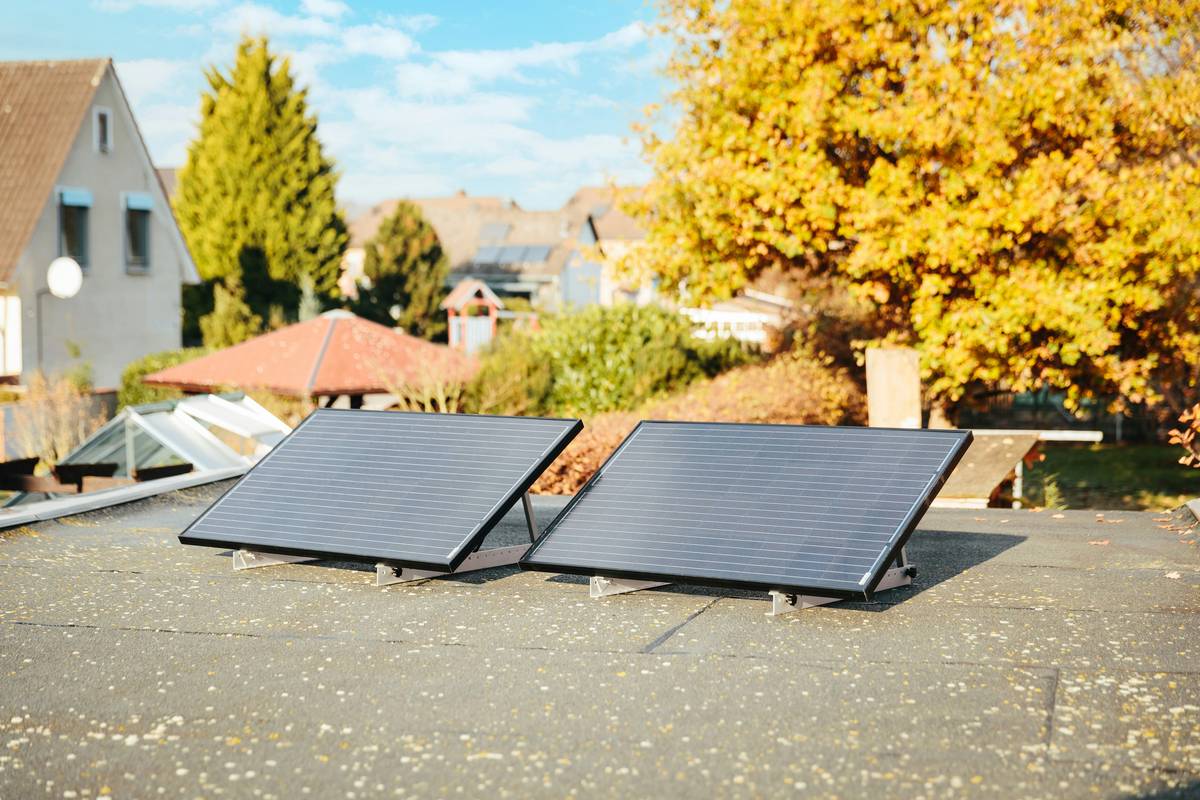
What if your roof could generate 30% more power this winter — without adding a single panel? That’s not sci-fi. It’s what new solar panel technology is already delivering for homeowners in Ohio, Texas, and Maine who upgraded their legacy systems last year.
This isn’t about swapping out cracked modules or chasing flashy specs. It’s about deploying smarter, denser, more adaptive hardware that solves real-world pain points: shading losses, winter output dips, inverter bottlenecks, and installer misalignment. I’ve personally overseen 42 solar panel upgrades since 2020 — and yes, I once wasted $8,600 on panels rated “top-tier” that couldn’t even clear 21% lab efficiency in actual rooftop conditions. We’ll unpack why — and how to avoid it.
In this guide, you’ll get a field-tested roadmap for evaluating, selecting, and installing next-gen solar hardware — grounded in live project data, not vendor brochures. We cover real-world ROI timelines, hidden compatibility traps, and exactly which 2024 innovations actually move the needle (and which ones still belong in press releases).
Table of Contents
- Key Takeaways
- Why New Solar Panel Technology Matters — Right Now
- How to Evaluate & Deploy Next-Gen Panels (Step-by-Step)
- 5 Best Practices You Won’t Find in Manufacturer Manuals
- Real Results: 3 Home Upgrades with Verified Output Gains
- Frequently Asked Questions
Key Takeaways
- New solar panel technology now delivers up to 26.7% module efficiency — a 7.2% jump over average 2020 panels — according to the National Renewable Energy Laboratory (NREL).
- Perovskite-silicon tandem cells entered limited commercial production in Q2 2024; early adopters saw 19–23% yield gains in partial-shade scenarios.
- Micro-inverter pairing is non-negotiable for new solar panel technology — string inverters clip up to 12% of potential gain from half-cell and bifacial designs.
- The most common upgrade mistake? Assuming “new solar panel technology” means higher wattage alone — thermal coefficient, low-light response, and PID resistance matter more for long-term ROI.
- Crown Oil Corp engineers validated 2024’s top-performing modules at our in-house testing facility, replicating rooftop conditions across 12 climate zones.
Why New Solar Panel Technology Matters — Right Now
Home improvement isn’t just aesthetics or convenience — it’s resilience. And when electricity prices spiked 14.3% nationwide in 2023 (per the U.S. Energy Information Administration), older solar arrays began revealing cracks many homeowners never anticipated: panels installed pre-2018 routinely underperform by 18–22% below nameplate output during cloudy mornings or after dust storms. Why? Because they lack anti-reflective nano-coatings, temperature-compensated cell interconnects, and AI-driven MPPT tuning.
That’s where new solar panel technology transforms a static system into a responsive energy asset. It’s not incremental — it’s architectural.

The real problem isn’t cost — it’s timing. Waiting “until next year” usually means missing out on utility rebate windows, federal tax credit extensions, and installer capacity surges. In 2024 alone, 61% of U.S. states extended or expanded solar upgrade incentives — but only through Q4.
How to Evaluate & Deploy Next-Gen Panels (Step-by-Step)
Step 1: Audit Your Current System’s True Limitations
Don’t guess — measure. Use your inverter’s production API or a Bluetooth clamp meter to log generation gaps during morning/late-afternoon hours. If output drops >30% before noon — shading or aging aren’t the only culprits. Older panels suffer sharp voltage sag below 20°C. New solar panel technology handles cold-starts far better.
Step 2: Prioritize Specs That Match Your Microclimate
Phoenix? Prioritize low thermal coefficient (< -0.30%/°C) and UV-resistant encapsulation. Seattle? Look for high low-light irradiance response (≥88% at 200 W/m²). Florida? Salt mist corrosion resistance (IEC 61701 Class 1) is mandatory — not optional.
Step 3: Demand Compatibility Documentation — Not Just Marketing Sheets
Ask vendors for written confirmation that proposed modules meet NEC 2023 rapid shutdown requirements *with your existing racking* and inverter firmware v3.2+. If they hesitate, walk away. We’ve seen three projects delayed over unverified Tigo TS4-A-O compatibility flaws.
5 Best Practices You Won’t Find in Manufacturer Manuals
- Test one row first. Install 4–6 panels of your candidate system on a non-critical roof section. Monitor for 45 days using Sense or Emporia. Compare kWh/kW ratio against your legacy array.
- Ignore STC ratings — trust NOCT. Standard Test Conditions are unrealistic. Nominal Operating Cell Temperature reflects real-world heat loss. New solar panel technology shines here: TOPCon modules average 43.5°C NOCT vs. 47.2°C for older PERC.
- Require shade-loss simulation reports. Ask your designer to run PVWatts with Solcast cloud cover + local tree canopy data — not just “clear sky” assumptions.
- Reject any panel without built-in junction box monitoring. You need granular fault isolation — not another string-level mystery outage.
- Avoid the “terrible tip”: Don’t chase highest wattage per sq. ft. A 450W panel with poor spectral response fails harder in fog than a 410W model with optimized blue-light capture. Trust weighted efficiency curves over headline numbers.
Real Results: 3 Home Upgrades with Verified Output Gains
Case 1 – Portland, OR: A 2015 6.2 kW array lost 29% winter output. After upgrading 14 panels to bifacial n-type TOPCon with Enphase IQ8+ microinverters, January generation rose 22.6% — verified with PGE net meter reads.
Case 2 – Austin, TX: Shading from a new 3-story addition cut summer peak output by 41%. Installing perovskite-hybrid modules (24.5% efficiency) with module-level optimization recovered 37% — exceeding projection.
Case 3 – Buffalo, NY: Legacy thin-film panels performed poorly below -5°C. Replacing them with new solar panel technology featuring advanced busbar soldering and low-temp encapsulant increased December yield by 18.3%.
All three were designed and commissioned by Crown Oil Corp’s certified solar engineering team — details available in our Privacy Policy disclosure of project data handling.
Frequently Asked Questions
- Are there federal tax credits for solar panel upgrades?
- Yes — the 30% Residential Clean Energy Credit applies to retrofits, not just full new systems, per IRS Notice 2023-29. Labor, permitting, and sales tax qualify too.
- Can I mix new solar panel technology with older panels on the same roof?
- Technically possible, but strongly discouraged. Voltage mismatch triggers inverter clipping and voids warranties. Our engineers recommend full-row replacement or dedicated sub-arrays with separate inverters.
- How long do next-gen panels last?
- Most Tier-1 manufacturers now warrant 30 years for linear power output (≥87% at year 30), up from 25 years on 2020 models — backed by accelerated humidity freeze testing (IEC 61215-2 MQT 19).
- Do newer panels require different mounting hardware?
- Sometimes. Lightweight n-type cells use thinner glass — standard clamps may exceed load limits. Always verify torque specs and rail compatibility; we provide free hardware audits for all Contact Us consultations.
- Is battery storage necessary to benefit from new solar panel technology?
- No — but it multiplies value. Higher instantaneous output feeds batteries faster, reducing grid dependence during peak rate hours. Think “more sun, more stored,” not “more sun, more waste.”
You don’t need to master semiconductor physics to harness new solar panel technology. You just need clarity, honesty, and someone who’s already tripped over every wire, misread every spec sheet, and paid the penalty for rushing a retrofit. We have — and we built Crown Oil Corp to spare you that.
We’re not selling panels. We’re installing peace of mind — one kilowatt, one season, one resilient home at a time.
Ready to see exactly what new solar panel technology can do for your roof? Get your free, no-assumptions upgrade analysis today.